Sixteen Nations End World Cup Goal Droughts at the 2026 Tournament
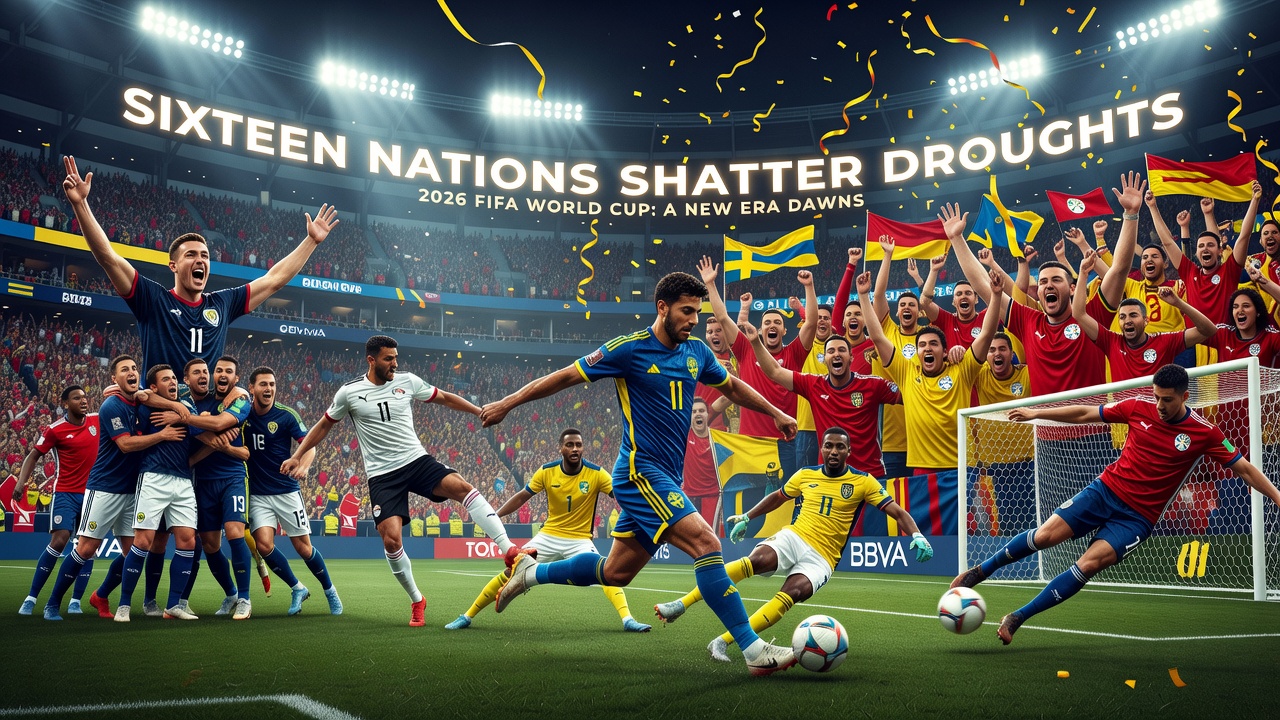
The 2026 FIFA World Cup, co-hosted across the United States, Canada, and Mexico, delivered one of its quieter but genuinely moving storylines: sixteen of the forty-eight competing nations scored their first World Cup goals in at least one full tournament cycle, ending droughts that in some cases stretched back decades. FIFA formally recognised the milestone, shining a light on the teams that finally reversed the trend. For supporters who had waited years - sometimes generations - to see their country find the net on football's biggest stage, the moments carried an emotional weight no tactical breakdown can fully capture.
Goal droughts at World Cup level are rarely about quality alone. Qualifying campaigns, political and financial turbulence within federations, and the brutal mathematics of a 48-team draw all play their part in keeping nations away from the final stages. Much like diverse competitions now spanning traditional sport and emerging formats - including sapphire esports - the expanded World Cup format is broadening the stage on which nations can write new chapters of their footballing stories. The 48-team structure, making its second appearance in 2026, was always expected to open doors for nations on the fringes, and that promise was kept in the most human of ways.
Europe's Long Waits Finally Rewarded
Sweden's absence from Qatar 2022 stung a nation that had reached the quarter-finals in Russia four years earlier, where Emil Forsberg's decisive goal against Switzerland in the round of 16 proved to be the last time the Swedes had celebrated at a World Cup. Nearly eight years on, Yasin Ayari ended that silence emphatically, opening the scoring in a 5-1 dismantling of Tunisia in Monterrey - a result that announced Sweden's return in unmistakable fashion.
Scotland's wait was even longer and more culturally loaded. Craig Burley's deflected finish against Norway in France 1998 stood as the nation's last World Cup goal heading into 2026 - a gap stretching the entire length of this millennium. The Scots arrived in Boston for their opener against Haiti carrying the full weight of that history, and John McGinn delivered the release the fans had spent 28 years waiting for, his strike securing a 1-0 victory and prompting scenes of unbridled celebration. The Czech Republic's Ladislav Krejci also broke a near-20-year silence, heading his side into the lead against South Korea, though a 2-1 defeat tempered the satisfaction. Bosnia and Herzegovina, whose sole World Cup appearance came at Brazil 2014 - where Avdija Vrsajevic sealed a historic 3-1 win over Iran - finally returned to the scoresheet through Jovo Lukic's header against Canada, earning a 1-1 draw.
Africa and the Americas: Relief Mixed With Resilience
Egypt's story is one of the tournament's most striking. The Pharaohs were absent from World Cup football for 28 years before Qatar 2018, and that edition brought little reward: two defeats before Mohamed Salah's consolation against Saudi Arabia in a 2-1 group-stage loss. Eight years on, Egypt returned once more - and this time produced a moment worthy of the occasion. Emam Ashour's spectacular goal against Belgium earned a 1-1 draw and Egypt their first World Cup point in 36 years, a statistic that underlines just how rare meaningful moments have been for one of Africa's most storied football nations.
Ivory Coast's Amad Diallo ended a drought that began when Wilfried Bony scored in a 2-1 defeat to Greece at Brazil 2014 - with the Elephants absent from the three subsequent editions. His decisive goal against Ecuador made the long wait feel worthwhile. Paraguay, quarter-finalists in South Africa 2010 where Cristian Riveros scored their last World Cup goal against Slovakia, endured 16 years before Mauricio pulled one back in a 4-1 defeat to the United States - a goal of honour, but a goal nonetheless. New Zealand's Elijah Just completed another 16-year story when he found the net in a 2-2 draw against Iran, echoing Shane Smeltz's iconic strike against then-champions Italy at the 2010 tournament.
The Weight of a Single Goal
What unites all sixteen nations is the disproportionate significance that a single goal can carry. At club level, a goal changes a scoreline. At a World Cup, after years of absence, it can redefine a generation's relationship with their national team. For supporters in Cairo, Asunción, Abidjan, Edinburgh, and beyond, these moments are not footnotes - they are the story. The expanded format of the 2026 tournament will continue to be debated in tactical and commercial terms, but for every nation that finally broke its silence, the argument in favour writes itself in the simplest possible language: the ball crossing the line, and a nation erupting.