Kenya Cheers African Teams at the 2026 World Cup With Passion That Defies Absence
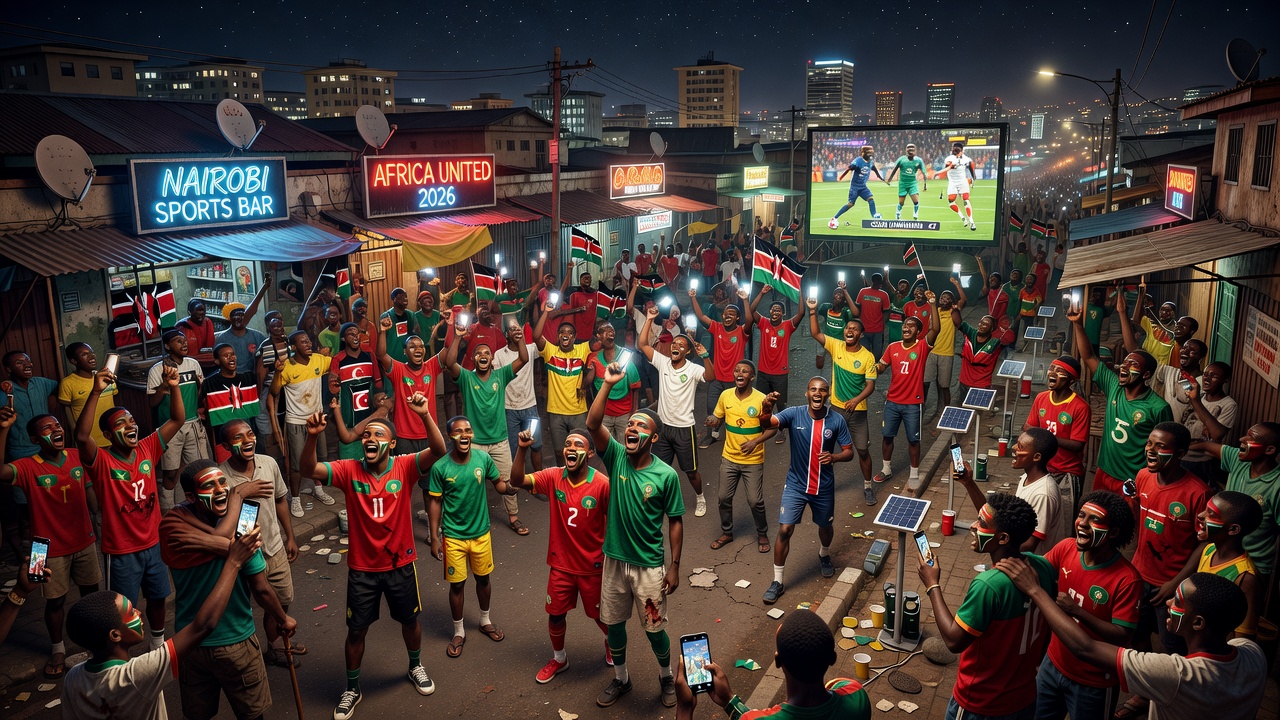
The 2026 FIFA World Cup is well underway across the United States, Canada, and Mexico, and while Kenya is again watching from the outside, you would struggle to tell that from the streets of Nairobi. Bars overflow on match days whenever Morocco, Senegal, or Nigeria take the pitch. The noise - the chanting, the arguments, the celebrations - travels well beyond any doorway. This is not casual viewing. For millions of Kenyans, the World Cup is a live event they participate in fully, even without a team of their own on the field.
The reasons run deeper than a general love of football, touching on identity, continental solidarity, and the way sport now travels through a smartphone screen in even the most remote corners of the country. It is worth noting that fan engagement during major tournaments has expanded well beyond football itself: interest in other disciplines being played globally - from basketball to tennis to niche sports where you might browse padel odds for a different kind of competitive fix - has grown steadily among Kenyan sports followers who have developed genuinely broad sporting appetites. But it is Africa's World Cup campaigns that command real emotional investment, and that story deserves to be told properly.
Understanding why Kenyans adopt African neighbours as proxy teams requires a look at history. Kenya has never qualified for a FIFA World Cup. The closest the Harambee Stars came was during the 2010 qualification cycle for the tournament held on home soil across the continent - a campaign that ended in heartbreak. Since then, realistic expectations have replaced hope, but the relationship with football has not dimmed. It has simply shifted. When Morocco became the first African nation to reach a World Cup semi-final in Qatar in 2022, something consolidated across the continent. That result was not just Moroccan - it was African. In Nairobi, Mombasa, Kisumu, and Eldoret, people who had never set foot in Casablanca wept with genuine emotion.
The Players Kenyans Already Know and Love
One powerful driver of proxy support is familiarity with individual players. Kenyan football fans are, broadly speaking, serious followers of European club football. The English Premier League dominates television schedules and social media conversation. When Achraf Hakimi lines up for Morocco, Kenyans see the Paris Saint-Germain fullback they have watched all season. When Sadio Mané pulls on Senegal's green, they recognise a man who won trophies at Liverpool and lit up the Champions League. Victor Osimhen and Mohammed Kudus are names known in Nairobi as well as they are in Lagos or Accra. That familiarity creates genuine emotional stakes. Supporting these players at a World Cup is a natural extension of following them through a club season.
Morocco leads the affection rankings without serious competition. The Atlas Lions carry the weight of 2022's historic run and enter 2026 as the team Kenyans most desperately want to go deep again. Their red jerseys, a visible presence in Nairobi markets, outsell kit from some domestic brands. Senegal, backed by their Africa Cup of Nations pedigree and a generation of elite European-based players, run a close second. Ghana bring a different kind of loyalty - historical, rooted in shared memory of 2010, when Louis Suárez's handball and Asamoah Gyan's penalty miss against Uruguay became a wound the entire continent felt. Cameroon carry the romance of the 1990 Indomitable Lions, a team that changed how the world saw African football. Nigeria's Super Eagles draw support partly through football quality and partly through the simple reality of a large and well-integrated Nigerian community in Kenya.
How the Viewing Experience Has Changed
The infrastructure around watching a World Cup in Kenya has transformed significantly over the past decade. Satellite television reaches far more households. Smartphones have made live updates, highlights, and match commentary accessible to fans in areas where a television set remains a luxury. A supporter in Kakamega with a 2G connection and a fully charged phone through a solar panel can follow a Morocco match in near real time. The World Cup, in practical terms, is no longer an event that requires a specific location. It arrives wherever you are.
Social media has amplified the communal dimension of watching. Reactions that once stayed inside a bar or a living room now ripple instantly across WhatsApp groups, X timelines, and Facebook pages. A Hakimi run, an Onana save, a Kudus goal - each moment becomes immediate, shared, collective. That connectivity strengthens the sense of participation even for those who cannot reach a screen showing the live match.
The Stakes Beyond the Scoreline
For many Kenyans, this World Cup also carries aspirational meaning. African football's growth at the highest level - measured in the quality of players reaching Europe's elite clubs, in tactical sophistication, in qualification numbers expanding with the new 48-team format - is something fans on the continent track closely. A strong African showing in 2026 matters not just for national pride but as evidence of a direction of travel. More African teams in the tournament means more matches, more moments, more players elevated to global recognition. Kenya's own federation and development structure exists inside that broader conversation. If Morocco or Senegal go deep again, it is another argument for investment, for infrastructure, for the possibility that the continent's football story is still being written upward.
Whether Kenya itself joins that story at a World Cup - perhaps in 2030, when the tournament expands further and African qualifying berths increase - remains to be seen. The Harambee Stars have shown flashes of competitive quality without converting them into sustained results at qualification level. But the fans watching in Nairobi today are not passive bystanders. They are students of the game, emotionally invested in its biggest stage, and ready to celebrate when the continent delivers. Until Kenya earns its own moment, the roar for Morocco's red shirts will do just fine.