Barcelona Seek FIFA Extension Over Female Coaching Quota
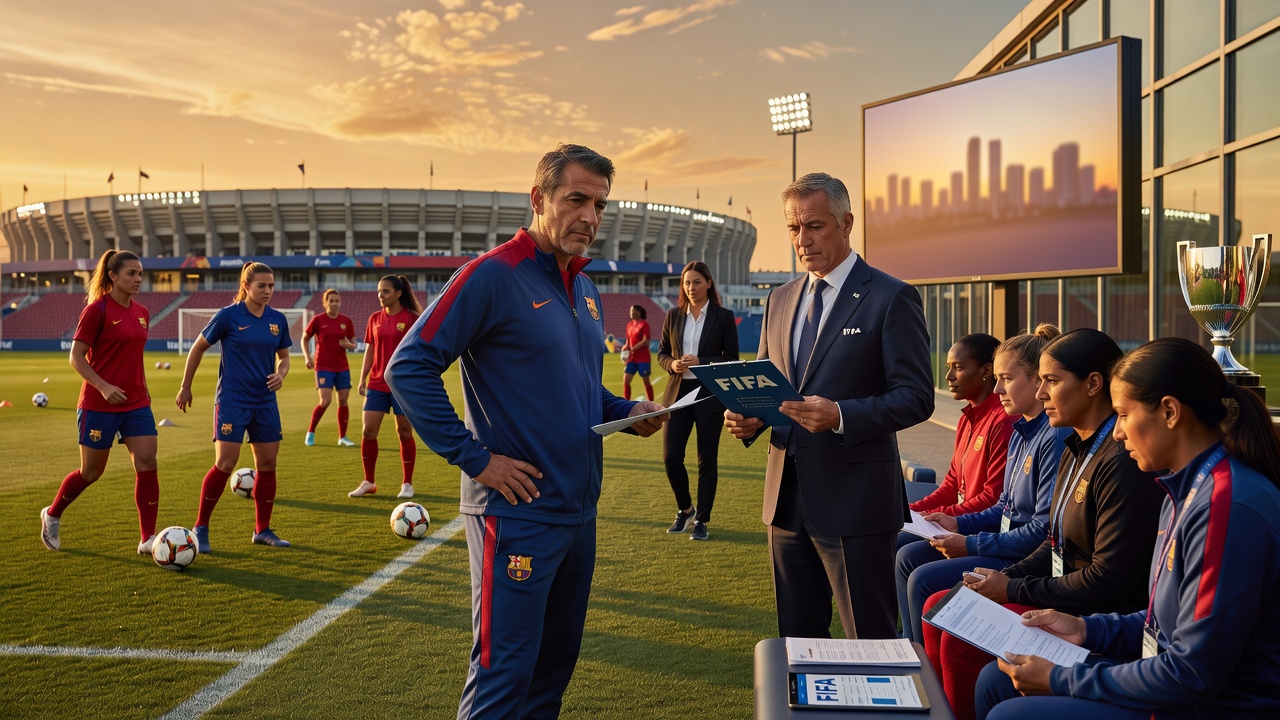
Barcelona Femeni have asked FIFA for extra time to meet new regulations requiring female representation on coaching staff before this month's Women's Champions Cup. The European and Spanish champions currently fall short of rules introduced by football's world governing body in March, which mandate at least two female staff members on the bench for FIFA-sanctioned women's competitions.
What the FIFA Rules Require
FIFA's regulations, which came into effect this year, state that one of the two required female staff members must serve as head coach or assistant coach, while a separate female member of medical staff is also mandatory. Crucially, clubs are not required to remove a male coach to accommodate the change, and squads are permitted to carry more than one assistant. The rules apply across FIFA youth and senior national team events as well as global club tournaments.
Barcelona's Gap and Their Response
Barcelona already satisfy the medical requirement, with women present on their health and performance staff. The issue lies with head coach Pere Romeu's technical bench, which currently has no female assistant coach. The club told The Athletic that they have received applications for the role and are actively working through a hiring process, but have not yet identified a candidate they consider the right fit. As a result, Barcelona have formally requested an extension from FIFA to continue that search without facing sporting penalties.
The timing is significant. Barcelona are entered in the second edition of FIFA's Women's Champions Cup, though as reigning continental champions they enter at the semi-final stage, with that fixture scheduled for January 27 in Miami. That gives the club a narrow window to resolve the staffing issue or secure FIFA's approval to proceed regardless.
A Wider Push for Representation
FIFA's intervention is aimed at addressing the persistent underrepresentation of women in senior coaching roles, a gap that was starkly visible at the 2023 Women's World Cup, where only 12 of 23 participating nations were led by female head coaches. With next summer's World Cup approaching, FIFA has framed the quota as a deliberate step toward change at both club and international level.
UEFA, by contrast, has no equivalent quota system for clubs competing in its competitions, including the Women's Champions League and domestic leagues under its jurisdiction. European football's governing body has instead opted for a longer-term approach, confirming that new minimum coaching licence requirements for head coaches and assistants will not arrive until the 2029-30 season.
Welcomed, but Not Without Caveats
Reaction among women working in coaching has been broadly positive, though not uncritical. Concerns persist around the structural barriers that have limited female representation in the first place - among them, restricted access to coaching pathways, the cost of qualification courses, limited opportunities for progression, and a coaching ecosystem still largely shaped around men. Some within the profession have cautioned that without tackling those root causes, quotas risk becoming a box-ticking exercise rather than a genuine shift in opportunity. Barcelona's situation, prominent given their status as European champions, is likely to be watched closely as an early test of how FIFA's new framework is applied in practice.


